15 PMOS/PCOS-Friendly Salad Recipes That Are Actually Filling
If you live with PMOS/PCOS, you might be feeling worn out and tired, and having to think about making complicated meals that also support your symptom management will likely be the last thing you want to do. We hear you, and we understand, so we’ve put together a guide with tips on how to make nutritious, filling and quick salads that meet your PMOS/PCOS needs, along with 15 dietitian-approved recipes to get you started.
Salads are perfect for the warmer weather, and can be had for dinner, a packed lunch, or even a picnic. Save this post for when you’re planning your next shopping trip!
Are Salads Good for PMOS/PCOS?
‘Salads’ don’t always get top marks for desirability, especially when you imagine a few droopy lettuce leaves with some dressing. So if you read the word “salad” and rolled your eyes, thinking ‘how boring!’ - we understand! But today we are here to show you how salads can be diverse, nutrient-dense, filling, and PCOS-friendly when put together well.
The key to making a great salad is to have a variety of food groups and nutrients to help keep your blood sugar levels steady and avoid those food cravings that may creep up later in the day.
What Makes a Salad PMOS/PCOS-Friendly?
Protein:
Having protein, alongside a source of fats and carbohydrates, can help keep blood glucose levels stable and support that feeling of fullness, which contributes to satiety and helps you feel energised throughout the day with minimal cravings.
Fibre-rich carbohydrates:
If you have PMOS/PCOS, you could be one of 80% of people who experience insulin resistance - meaning you are likely to have higher levels of insulin in the blood, which can lead to carbohydrate cravings. One of the most researched diets in managing PMOS/PCOS is a low glycemic index (GI) diet, which can help manage insulin resistance. The glycaemic index (GI) of foods measures how quickly a carbohydrate is digested and absorbed. Foods with a high GI are digested quickly and cause blood sugar levels to rise quickly. Low GI foods are usually fibre-rich and/or wholegrains, which take longer to digest. This leads to a slower rise in blood sugar levels. Including more lower GI foods if you have PMOS/PCOS can help maintain your energy levels for longer and can reduce your symptoms (1).
Healthy Fats:
Healthy fats can be found in foods such as olive oil, nuts, and oily fish like sardines and salmon. These are key for PMOS/PCOS, as eating omega-3-rich foods has been found to help reduce inflammation, a key player behind the scenes in PMOS/PCOS pathways (2).
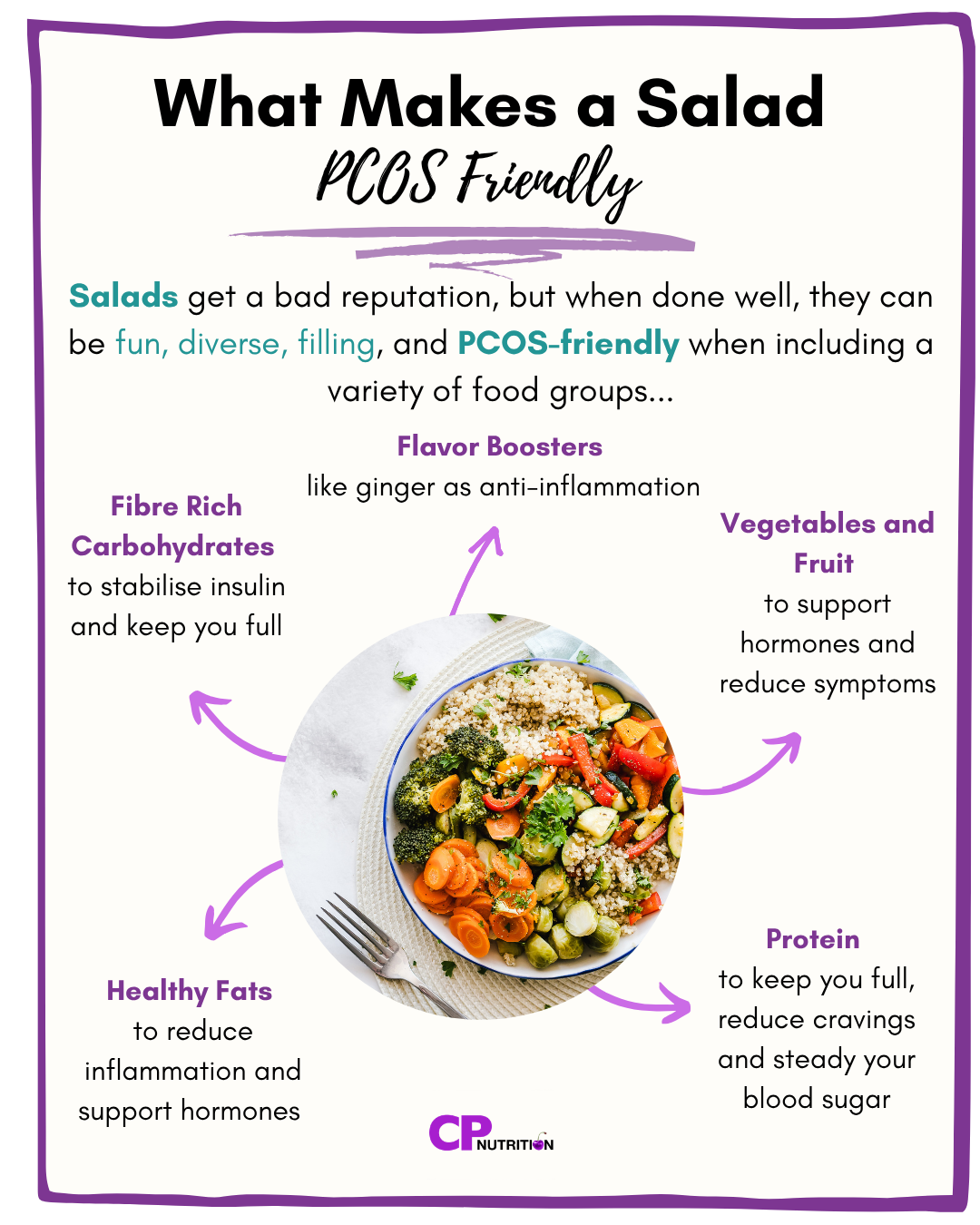
Colour & Fibre from Veggies:
Vegetables provide fibre, which helps you feel full and slows digestion, resulting in a slower rise in your blood sugars, which can help with PMOS/PCOS management. Consuming a mixture of different coloured veggies also means getting a variety of antioxidants, which have been suggested to help with insulin resistance, reduce PMOS/PCOS symptoms, support ovarian health, and may even help mental wellbeing (3).
Flavour Boosters:
Flavour boosts include things like herbs and spices, which are great to add taste to your salad without relying on sugar or salt. PCOS-friendly options can include herbs such as mint, parsley, thyme, basil, mustard, and spices like cinnamon, cayenne pepper, and paprika, with turmeric and ginger especially recommended, as they are known to have anti-inflammatory properties that can be beneficial for PCOS. Ginger is especially recommended for those with PCOS, as it is found to help with insulin resistance and reducing inflammation (4).
If you have questions about PCOS or your diet to support you in your PCOS journey, book a free enquiry call with Claire Pettitt, a PCOS specialist dietitian, to find out how 1:1 support can help you.
Tips for making salads
When you’ve had a busy day, and find yourself rushing home from work, the last thing you want to do is search the kitchen for ingredients which need cutting, chopping and cooking to put together a wholesome meal. Even the thought of it might be overwhelming and put you off meal preparation and stop you from eating in ways that can help manage your PCOS symptoms. But salads can be quick and easy to prepare, and so here are some top tips to help you become an efficient salad-making pro with ease.
Prepare in advance: the beauty of salads is that the components can be prepared in advance. e.g. precut vegetables, grill some chicken or boil some quinoa in advance, and store them in an airtight container. You could even prepare the whole salad itself.
Tip: add the dressing just before eating so your salad components don't turn soggy!
Use leftovers from dinner: if you have any leftover chicken or fish from dinner, put it aside and add it to a salad the next day
Use tinned for convenience: If you would like to add chickpeas to your salad, buy them canned so you save yourself the time of soaking and cooking them.
Batch cook: If you want homemade croutons, batch cook them and keep them in a ziplock bag to have them for weeks.
How to build your own DIY salads!
You are now ready to build your very own salad! Below we have a list of different recommended foods from each food group. Consider this your possible shopping list, which you can carry with you from now on to build your very own salad! Try to add at least one (or sometimes more) item from each food group:
Protein: chicken, fish (such as tuna or salmon), eggs, dairy products like feta cheese, tofu, beans such as black beans or kidney beans, or edamame beans and pulses like lentils or chickpeas.
Carbohydrates: quinoa, brown rice, wholegrain pasta, sweet potato, butternut squash, lentils, toasted wholegrain pitta bread, or homemade wholegrain croutons.
Healthy Fats: olive oil, olives, avocados, nuts such as walnuts or pistachios, and seeds such as chia, flax or sunflower seeds. Seaweed and algae are also some great healthy fat sources.
Vegetables and Fruit: leafy greens such as kale, spinach, rocket, watercress, and vegetables like broccoli, asparagus, courgette, peppers, cucumbers, tomatoes, beetroot, red onions, and artichokes. Fruits such as strawberries, blueberries, raspberries, pomegranates and pears can also go amazingly well in a salad and provide colour and fibre.
Flavour Boosters: lemon juice, apple cider vinegar, garlic, ginger, mustard, cumin, turmeric and ginger, and fresh herbs such as basil, mint or parsley.
Salad Dressing Recipe Ideas
All good salads need a salad dressing, and we have 3 easy-to-make PMOS/PCOS-friendly salad dressings for you to try:
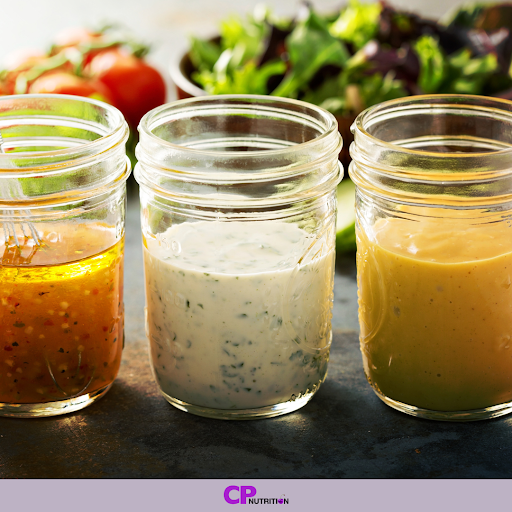
The olive oil base provides healthy fats, which help with hormone production. The lemon juice and garlic have anti-inflammatory properties. Dijon mustard adds flavour without the need for sugar.
Easy 5-Minute Herby Greek Yoghurt Ranch (Dressing or Dip!)
The Greek yoghurt provides a source of protein and supports gut health, which is important for PMOS, as good gut health is linked to helping hormone balance. It’s finished off with anti-inflammatory garlic and herbs.
Apple cider vinegar is PMOS/PCOS-friendly and is suggested to improve insulin sensitivity (5), with olive oil, which provides healthy fats and is anti-inflammatory. Garlic also adds anti-inflammatory benefits, with the Dijon mustard adding flavour depth without excess sugar.
15 PMOS/PCOS-Friendly Salad Recipes
If you are still feeling unsure about making your own PMOS/PCOS-friendly salad, fear not, we have provided a list of 15 PCOS-friendly salad recipes to get you started!
Cauliflower, Pomegranate, and Pistachio Salad
This salad is fresh, flavourful and unique, combining cauliflower, a low-glycaemic index food, with anti-inflammatory onions, healthy fats from the olive oil and pistachios, and a burst of antioxidants from the pomegranate seeds. With the fresh parsley, mint, and tarragon, this salad packs a serious punch of flavour.
Cauliflower and chickpea salad
Quick, simple, and satisfying, the low-glycaemic cauliflower and the protein-rich chickpeas help provide steady blood sugar levels and keep hunger at bay. The red onions and the garlic add depth, with the tahini dressing and the warming spices. This is a simple, fuss-free PMOS-friendly salad that delivers on flavour and nutrition. To make the salad more filling, pair this salad with chicken or fish.
This salad has it all, the tuna is protein-rich, with the wholegrain pasta providing a slow release of energy. Fibre-packed artichoke hearts and healthy fats from olives make this a balanced PCOS-friendly meal. Finished off with some capers and parmesan, this provides a salad bursting with flavours which would be perfect for dinner, lunch and meal prep.
Light, fresh and packed with protein. This salad includes grilled chicken, a lean protein source, while the red peppers, cucumbers and onions bring colour, crunch and anti-inflammatory benefits. The tzatziki ties this salad perfectly. Serve with toasted wholegrain pitta instead of pita chips for a more PMOS/PCOS-friendly meal, and add a drizzle of olive oil for extra healthy fats.
Mix ‘n Match Mediterranean Grain Salad
This salad is super versatile. Just choose your favourite whole grain as the base, and pile on white beans for more protein and fibre, tomatoes for antioxidants and a simple olive oil dressing to tie it all together. The flexible base of grains means you will never get bored with this recipe. Top with grilled chicken or canned tuna to make it a complete and balanced PMOS/PCOS-friendly meal.
The wholegrain pasta and protein-rich chickpeas form the perfect PMOS-friendly base, while the pistachios add healthy fats and a satisfying crunch. The carrots and red onions bring anti-inflammatory benefits and lots of crunch, and the zesty orange vinaigrette makes this salad anything but basic. Try swapping dried apricots for fresh ones to keep the sugar content down and make this recipe even more PCOS-friendly.
This protein powerhouse salad with chickpeas and cannellini beans is fibre-rich, perfect for keeping blood sugar steady. The peppers and red onions bring depth and flavour, whilst the olives provide healthy fats. Use feta in moderation due to it being quite high in sodium, and serve with wholegrain pitta or quinoa on the side for a complete and filling PCOS-friendly meal.
Fibre-rich, antioxidant-packed, and beautifully flavorful. The bulgur wheat provides a low glycaemic base, while the tomatoes, cucumber and bell peppers bring freshness, antioxidants and anti-inflammatory benefits. Walnuts or almonds provide omega-3 healthy fats, and the pomegranate seeds give a burst of sweetness. To boost the protein, add chickpeas or chicken.
The Chickpea and Avocado Everything Bowl
The chickpeas and feta provide a source of protein, and there are plenty of vegetables, including cucumber, lettuce, cherry tomatoes, red onions, and roasted pumpkin. The avocado provides lots of healthy fats, as do the walnuts.
Fresh, light, and nourishing, the quinoa replaces traditional salad bases and makes this an especially PCOS-friendly salad. The tomato and the cucumbers provide a hydrating addition, and the garlic, parsley and green onions add a layer of flavour. Add some chickpeas or some chicken on the side to make this a more filling, protein-rich meal.
Colourful, satisfying and seriously good for your hormones, the antioxidant-rich beetroots, low-glycaemic-index sweet potatoes, and fibre-rich Brussels sprouts and kale make this a nutrient-dense PCOS-friendly salad. The creamy avocado, walnuts, olive oil and avocado oil provide a generous amount of healthy fats, paired with the zesty lemon dressing, which ties it all together. Add chickpeas or grilled chicken for protein.
Tuna, asparagus & white bean salad
Simple, quick, and full of goodness. The asparagus and red onions add crunch and colour, with the white tuna and cannellini beans, creating an impressive double protein source perfect for blood sugar balance. A simple olive oil and red wine dressing keeps this light and flavorful. Add avocado for extra healthy fats, and serve with quinoa or wholegrain pitta for a more complete meal. Here is a recipe for homemade pita bread!
This salad is a celebration of greens- asparagus, green beans, long-stem broccoli, spring onions, cabbage and peas coming together to make a wonderful vegetable-dense salad which is good for gut health and for keeping your insulin levels steady. The mint and radishes add freshness and flavour, and are topped with a simple olive oil and Dijon dressing, which is a boost of healthy fats. To make this meal more filling for longer, add salmon, chicken, or legumes such as chickpeas.
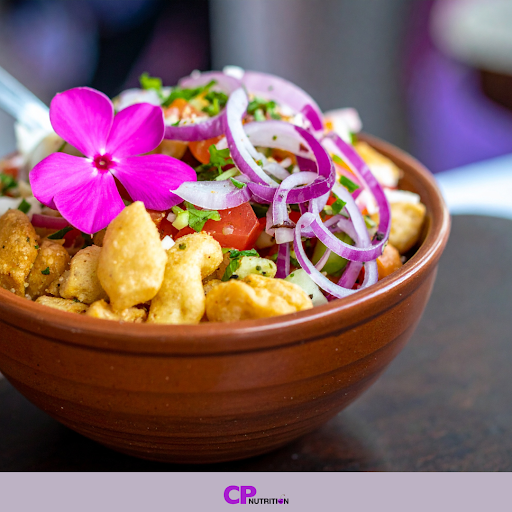
14. Green goddess avocado salad
This salad lives up to its name. It contains celery, lettuce, radishes, green apple, and cucumber to create a wonderful low-glycaemic base. The grilled chicken and creamy Greek yoghurt provide a nice source of protein to keep blood sugar levels stable and hunger at bay. The avocado in the salad and the dressing provide lots of lovely, healthy fats. Add quinoa or wholegrain pita bread on the side to make it more filling and to have a source of carbohydrates.
15. Harissa fish with bulgur salad
Bold, warming and balanced, this bulgur wheat provides a high-fibre, low-glycaemic base, and the white fish provides protein and omega-3. Add spinach or rocket for some leafy greens, or add an avocado, pumpkin seeds, or a drizzle of olive oil for extra healthy fats.
Final Thoughts
Now you can see salads can be exciting, interesting, easy to make and can most definitely be PMOS/PCOS-friendly. Just remember to include a variety of foods rich in protein, healthy fats, fibre-rich carbohydrates, and vegetables, and don't forget to add some flavour boosters to make salads not only delicious but craveable too!
You can book a free 15-minute enquiry call with Claire Pettitt, specialist women’s health dietitian, to talk about your PCOS journey and next steps - no pressure, just a chance to ask questions about 1:1 support and explore your options.