Can Dairy-Free Diets Treat PCOS?
“Is dairy bad for PCOS?” and “Should I cut out dairy from my diet completely?”
These may be questions you have in your head. In fact, you might have come across social media nutritionists suggesting dairy-free diets can “cure” Polycystic Ovary Syndrome (PCOS) (1).
This can feel confusing, especially since dairy is part of many meals, including lasagne, pizza and even your morning bowl of cereal. In this blog, we’ll explore what the research actually says about dairy and PCOS and help you figure out what works best for you without jumping to conclusions.
What are dairy products?
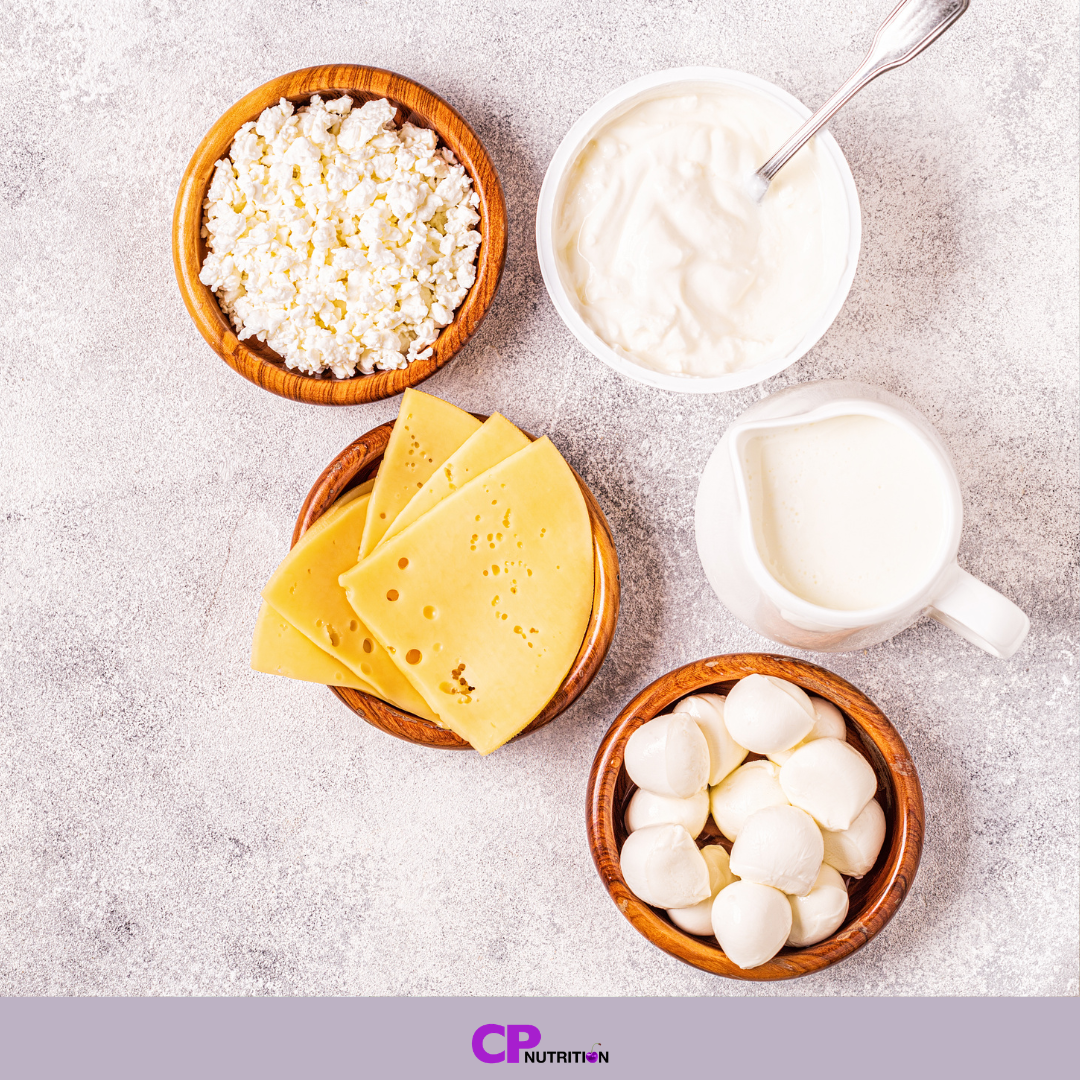
Dairy products may include:
Milk
Cheese
Yoghurt
Cream
Dairy foods can be a valuable source of nutrients. For example, one glass of semi-skimmed milk provides a third of your daily calcium, which is important for bone strength, as well as vitamin B12, protein, phosphorus and riboflavin (vitamin B2), supporting overall health (2).
What are the concerns with PCOS and dairy?
Social media often presents dairy as something to avoid because it is ‘inflammatory’ or ‘hormone-disrupting’. While this can sound scary and may be concerning, it is important to remember that not every claim you see online is supported by scientific evidence or clinical research.
One proposed theory behind this claim is that eating milk proteins may lead to an increase in insulin and the hormone insulin-like growth factor-1 (IGF-1) levels. High levels of IGF-1 have been linked to acne development and androgen (those male-type hormones) activity (3, 4). Since insulin resistance and hormonal imbalance are already common features of PCOS, this has led to concerns that dairy products may worsen symptoms in some individuals.

When it comes to claims that dairy can be inflammatory, well the evidence seems to suggest this isn’t quite true. A systematic review (basically a scientific study which combines lots of good quality research done in a specific area - in this case 18 studies looking at dairy intake and inflammation) found that consuming dairy products didn’t actually increase inflammatory biomarkers in healthy individuals, and in some studies it actually reduced inflammation (5)! This was similar to other studies which have also found a beneficial effect of dairy on inflammation, especially with fermented dairy products (6).
Most of the research around dairy and inflammation has not specifically been carried out in people with PCOS, so although these results are interesting, it is still too early to make specific claims or recommendations about the impact of dairy on inflammation in PCOS.
Does dairy worsen PCOS symptoms? The evidence behind it.
In addition to the hormone-disrupting and anti-inflammatory online claims about dairy, you may also have seen claims that dairy worsens PCOS symptoms, and it is completely understandable to feel concerned when so many personal experiences and “success stories” are shared on social media. However, it is important to look at the evidence behind any claims before you make any decisions to make changes to your diet
So let’s explore the relationship between dairy and common PCOS symptoms:
Acne
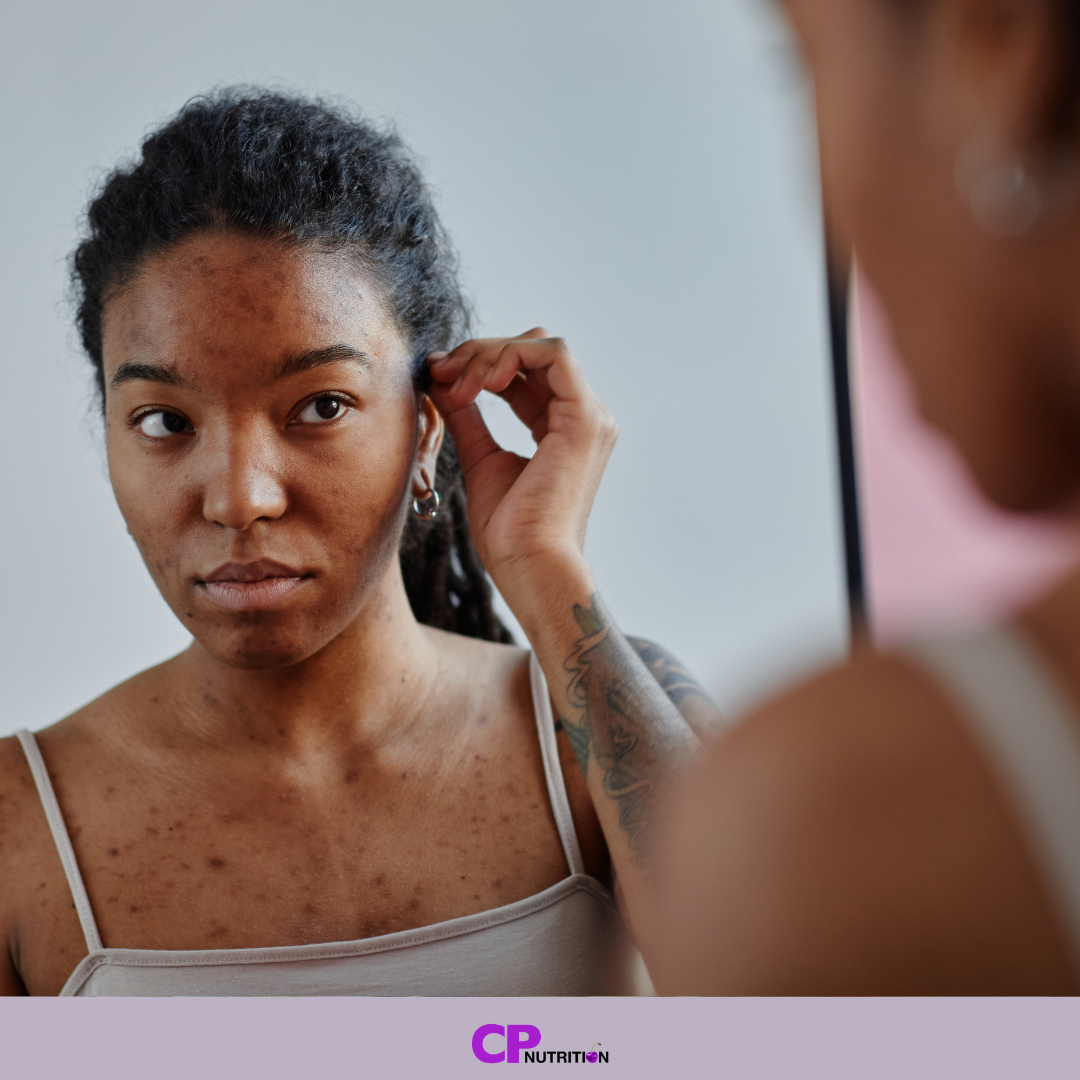
Acne is common in PCOS and may affect your confidence in daily life. Unfortunately, there has not yet been any research carried out looking at dairy intake and acne in people with PCOS.
Some research suggests that dairy foods may be linked with a higher likelihood of acne in people aged 7-30 years (7). However, the evidence is still mixed, and you may not experience the same effect. More research is needed before we can say for certain that dairy directly causes acne.
In addition, a review of 27 studies in people without PCOS found that low-fat and fat-free dairy products were linked more often with acne, while full-fat dairy seemed to have a smaller effect (8). One possible explanation is that low-fat dairy may have a stronger effect on hormones like insulin and IGF-1, which can influence oil production in the skin and risk of acne in some people. So, if acne or oily skin is part of your PCOS profile, you might find that choosing full-fat dairy options instead of low-fat versions is a more balanced approach, rather than cutting all dairy out completely.
Bloating
Bloating is a common symptom in those with PCOS, but the reason for this is not always known. Whilst we know that irritable bowel syndrome (IBS) seems to be more common in people with PCOS compared to those without (9), not all bloating is due to IBS. Some people report feeling bloated after consuming dairy, so let’s have a look at why that might be the case.
Lactose Intolerance: Research has shown that if you have PCOS you are more likely to experience hypolactasia, which means you do not produce enough of the enzyme lactase to digest lactose, the sugar found in milk and dairy (10). Therefore, you may experience lactose sensitivity, causing gas, digestive discomfort, and bloating after consuming dairy.
Gut Microbiome: Having PCOS appears to affect the diversity and balance of bacteria in your gut (11). A less diverse microbiome can make the digestive system more sensitive, which may explain why you may experience symptoms, including bloating and stomach discomfort, after consuming dairy products (11). This suggests that dairy may not necessarily cause or worsen PCOS symptoms directly, but that underlying changes to your gut health linked to PCOS could play a role in how your body tolerates dairy.
Insulin resistance
Insulin resistance is common in PCOS and can affect your appetite and energy levels. A literature review suggests that the impact of dairy on insulin resistance in PCOS is still unclear due to limited research. However, studies in healthy individuals show long-term dairy consumption of 2 servings per day has shown benefits for insulin resistance (12, 13).
Fertility
PCOS has been known to potentially cause infertility in women. Interestingly an observational study (a study which looks at patterns in people’s diets and health over time) found that having low-fat dairy has been linked to increased incidence of infertility, and having high-fat dairy is linked to reduced incidence of infertility (14). This type of study can’t show that one thing directly causes another, which means we can’t definitively say low-fat dairy causes infertility, or that high-fat protects against infertility, only that there may be an association, which could also be influenced by other factors like overall diet or lifestyle (14). Therefore, current evidence is not strong enough to make recommendations,
Overall, the research on dairy and PCOS symptoms is still limited and not always consistent. But given it is linked to beneficial effects on inflammation in those without PCOS, and that full fat dairy appears to bring more benefits than low-fat dairy when it comes to fertility and acne, it is certainly something worth considering. In any case, it’s best not to make big dietary changes based on online claims alone and instead focus on what works for you, and if you are concerned, then discuss it with your women’s health dietitian.
If you have questions about PCOS or your diet to support you in your PCOS journey, book a free enquiry call with Claire Pettitt, a PCOS specialist dietitian, to find out how 1:1 support can help you.)
What do official guidelines say?
Official guidelines may differ from information shared on social media because they are based on high-quality scientific research. This evidence often takes years to conduct, review, and evaluate through rigorous discussions with health and safety experts before being used to develop accurate, safe, and evidence-based guidance for healthcare professionals and the public.
National Institute for Health and Care Excellence (NICE) guidelines and British Dietetic Association (BDA) do not recommend removing dairy products from the diet if you have PCOS (15, 16) because removing dairy without careful planning can make it harder to obtain key nutrients for general health.
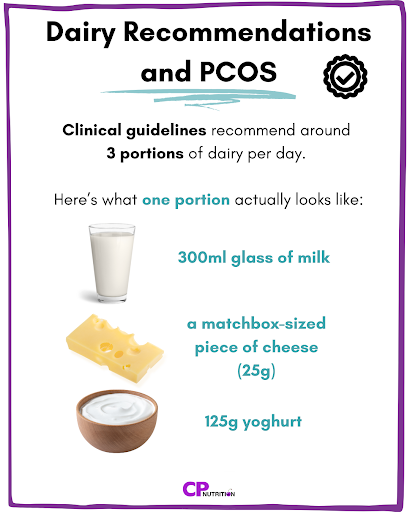
In fact, the NHS generally recommends 3 portions of dairy per day to meet calcium needs (17).
When to consider a dairy-free diet
In some instances, a dairy-free diet might be indicated. For example, if you experience:
persistent bloating
digestive discomfort
acne flare-ups
or if you notice consistent patterns with your PCOS symptoms and dairy consumption.
A more balanced approach than eliminating dairy in the long-term might be to try a dairy-free diet for approximately 2-3 weeks, and see how your body responds.
How to go dairy-free in a balanced way
If you do decide to trial a dairy-free diet, you can consider substituting dairy with some dairy-free alternatives such as:
Fortified soya milk eg. Alpro soya original, instead of cow’s milk
Fortified yoghurt eg. Alpro soya yoghurt, instead of normal greek yoghurt
Dairy free cheese eg. Violife Plant based Original Slice cheese instead of milk-based cheddar cheese
Blended tofu, soya or oat cream eg. Oatly oat cream instead of dairy-based cream
When using dairy-free alternatives, be sure to double check if they are fortified with nutrients found in dairy, such as vitamin B12 and calcium, to avoid missing out on vital nutrients that you would have otherwise had from dairy foods. You can find this on the nutrition labels on packaging such as “Fortified with calcium, vitamin B2, B12 and D”.
Summary/Final thoughts
There is plenty of conflicting information on dairy-free diets and PCOS, and it is easy to feel unsure about what to do. Dairy is still an important part of a balanced diet and should not be removed automatically without giving it some thought on what you may be missing out on if you exclude it. The important thing to remember is that there is not one single approach that works for everyone. Your personal experience matters, and it is good to understand how your body reacts to changes in your diet before you make any long-term changes or removing foods from your diet.
You don’t have to figure it out alone. You can book a free 15-minute enquiry callwith Claire Pettitt, specialist women’s health dietitian, to talk about your PCOS journey and next steps - no pressure, just a chance to ask questions about 1:1 support and explore your options.
Reference List
I was diagnosed with PCOS and was soon drowning in misinformation
Milk consumption: aggravating factor of acne and promoter of chronic diseases of Western societies
Adult-type hypoplasia and calcium intake in polycystic ovary syndrome
A Prospective Study of Dairy Foods Intake and Anovulatory Infertility
Scenario: Management of Polycystic Ovary Syndrome in Adults - NICE
Polycystic Ovary Syndrome (PCOS) Dietary Advice - Royal Berkshire NHS Foundation Trust