
Managing PCOS and Mood Swings: A Dietitian’s Top Tips
If you’re living with Polyendocrine Metabolic Ovarian Syndrome (PMOS), previously known Polycystic Ovary Syndrome (PCOS) and have been feeling more emotional, overwhelmed, anxious or irritable lately - you’re not imagining it. Some days, it can feel like your mood changes out of nowhere, making everyday stress feel even harder to manage.
However, it is completely understandable as hormonal imbalances, stress, sleep and daily lifestyle habits can all play a role in how you feel mentally and emotionally while living with PMOS (1).
In this blog post, let's explore why mood swings can happen if you have PMOS and some practical ways to overcome them.
Can PCOS cause mood swings?
If you have PCOS/PMOS, your hormones may be imbalanced, which leads to higher levels of androgens (male sex hormones such as testosterone) and insulin resistance. This can affect your mood and emotional well-being.

In fact, a systematic review of nearly 50 studies showed that women with PMOS are more likely to experience symptoms including depression, anxiety and lower quality of life compared with women without PMOS, which may impact your day-to-day emotions (2).
PMOS has been linked to psychological and emotional distress, which can further influence your mood (3). Additionally, you might be experiencing sleep struggles, which are also common in PMOS and may further disrupt hormonal regulation, potentially contributing to mood swings (4).
As you can see, there are many ways that PMOS may cause mood swings, and it is not easy to pinpoint a single cause. But do not panic! Everyone’s body works differently, and trying to “fix” everything all at once may only put more stress on yourself. Instead, focus on some practical nutrition and lifestyle habits that may help support your physical and emotional well-being.
Food habits that can play a role in improving mood
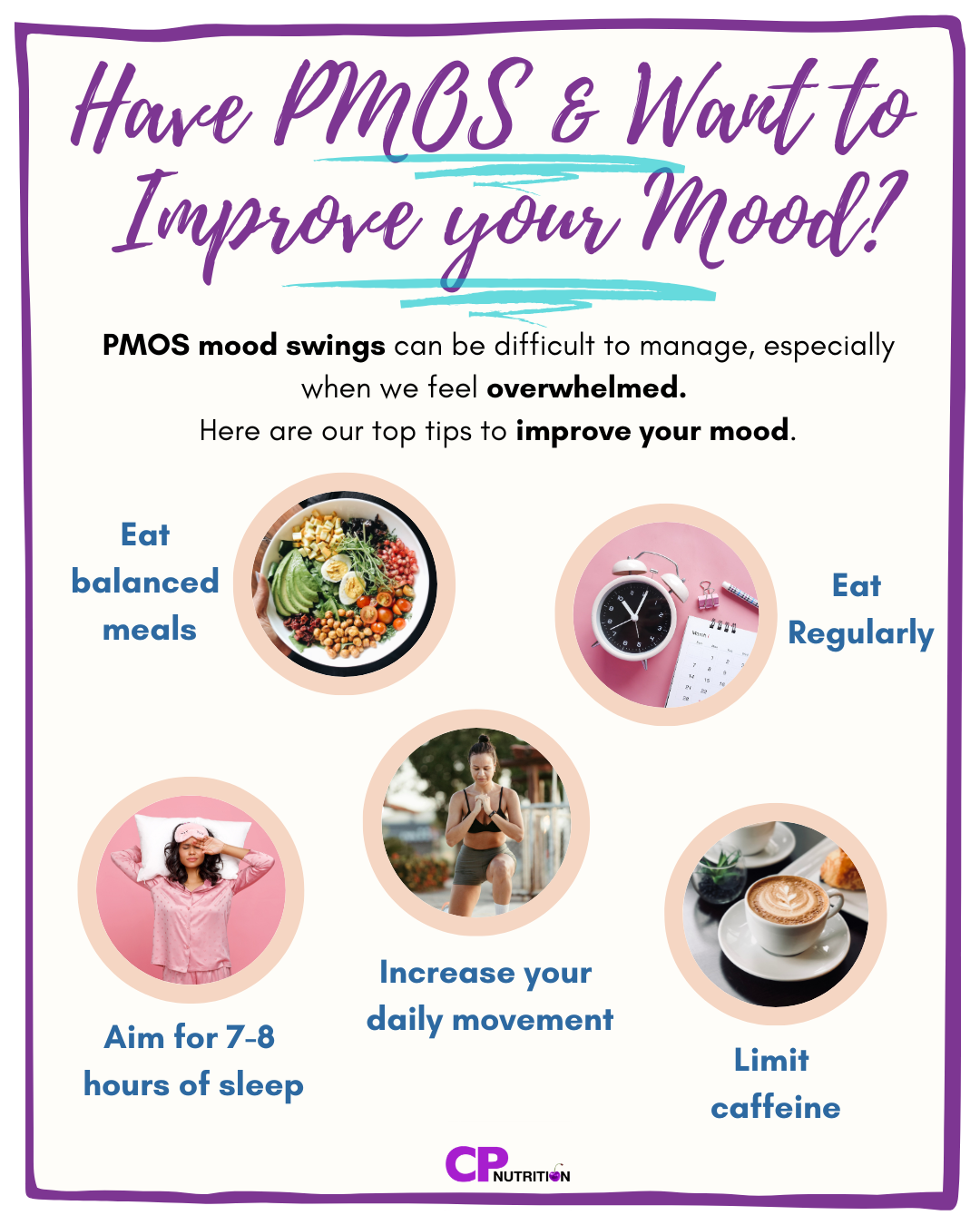
Balanced meals
Having a balanced diet may help improve your mood. Choosing whole foods like whole-meal bread, whole-grain cereal, whole-wheat pasta and brown rice instead of refined carbohydrates may help provide you with more balanced energy levels throughout the day. While including a variety of fruits, vegetables and protein sources in your diet like apples, berries, spinach, carrots, lean chicken, fish and beans, can also support your overall health and well-being (1).
Making small, healthier changes to your eating habits may help reduce symptoms of emotional distress and improve your overall quality of life when living with PMOS (5).
Avoid undereating
You may experience stress, anxiety and low mood, which can sometimes make it harder for you to maintain regular eating habits when living with PMOS. You may find yourself skipping meals and having smaller portion sizes during meals, only to experience stronger cravings or overeating later on. Research suggests that women living with PMOS may be more vulnerable to emotional eating and appetite changes due to the combined effects of hormonal and psychological stressors (6).
Instead of focusing on eating perfectly, try to avoid skipping meals and aim for regular meals or small snacks throughout the day. This can help support your energy levels, mood and build a healthier relationship with food while managing PMOS symptoms.
Limit caffeine
Caffeine can be found in coffee, matcha and energy drinks. Evidence has shown that caffeine can increase stress levels, potentially affecting your daily mood (7). Therefore, being mindful of your caffeine intake is a good idea if you are experiencing mood swings. You do not have to remove caffeine from your daily routine altogether, but you may try limiting coffee consumption to roughly 1 to 2 cups of coffee per day to see any improvements in your mood (1).
Limit alcohol
Alcohol has been found to cause sleep disruption and increased risk of depression and anxiety. Therefore, limiting alcohol may be an option you could try to help reduce mood swings. You may continue to drink moderately under the standard NHS recommendations of 14 units per week spread over a few days (1). To find out more about PMOS and alcohol consumption, or how to calculate alcohol units, read our blog post on Alcohol and PMOS.
Gut health
Evidence suggests that gut health may play a role in supporting mood and well-being through the “gut-brain axis”, a communication pathway between the digestive system and the brain (8). The gut microbiome, which is made up of a variety of bacteria and microorganisms living in the gut, may influence how we feel emotionally and mentally (8). We know that people with PMOS can have ‘dysbiosis’ - an imbalance in the types of bacteria that make up the gut microbiome (9); therefore, including foods that support gut health, such as yoghurt, kimchi, oats and green leafy vegetables, may be helpful for you.
What else should you consider to improve your mood?
Sleep
Getting enough sleep is more important than you may think when living with PMOS. You may notice that after a poor night’s sleep, mood swings feel harder to manage, and stress levels may feel more overwhelming. A systematic review showed that getting enough quality sleep can help support a more positive mood the next day, while disrupted or inconsistent sleep patterns may increase feelings of irritability and low mood (10).
Therefore, practising a regular sleep routine by aiming for consistent bedtimes, limiting screen time before bed and giving yourself time to unwind can make a real difference to both your mental wellbeing and overall PMOS management.

Stress
While living with PMOS, sometimes stress may feel more overwhelming than usual, which may also contribute to your mood swings (11). While managing stress is not always easy, small calming habits can make a difference. You could try mindfulness, guided breathing exercises, talking to someone you trust, or even taking a short walk, which can help clear your mind and reduce stress levels.
Exercise
Exercise may also help improve your mood. A systematic review reported reduced PMOS-related distress and improved emotional well-being with regular physical activity. Including some form of exercise in your routine may help support both your mood and overall well-being.
Read our blog post on how to manage PMOS symptoms with lifestyle changes for more tips.
Mood swings and PCOS - small changes can help!
Overall, mood swings can be a very common experience when living with PMOS, but there are practical ways to help manage stress and support your emotional well-being in day-to-day life. There is no one-size-fits-all approach to managing PMOS symptoms, so finding strategies that work best for you is important.
If you’d like gentle, realistic support in your inbox, join our free fortnightly email newsletter. You’ll get simple tips, recipes and support every two weeks - so you can feel less overwhelmed and more in control of your PMOS/fertility.
References
The mental health of women with polycystic ovary syndrome: a systematic review and meta-analysis
Increased risk of depressive disorders in women with polycystic ovary syndrome
Cortisol responses to mental stress, exercise and meals following coffee intake in men and women
The Gut-Brain Axis: Influence of Microbiota on Mood and Mental Health
Depression, anxiety and perceived stress in women with and without PCOS: a community-based study